
Chief Justice Announces 2026 Problem-Solving Court Month with Proclamation
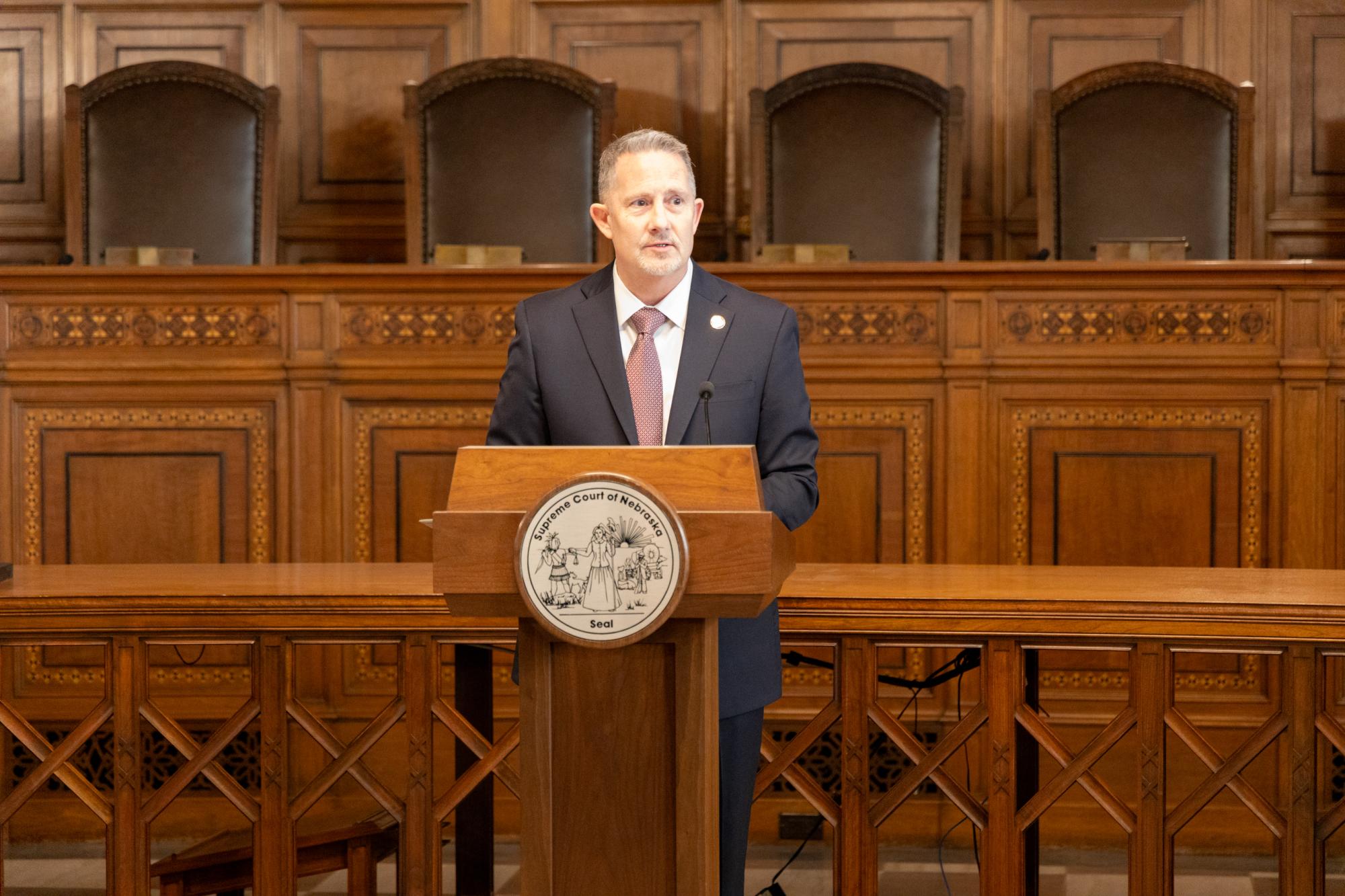
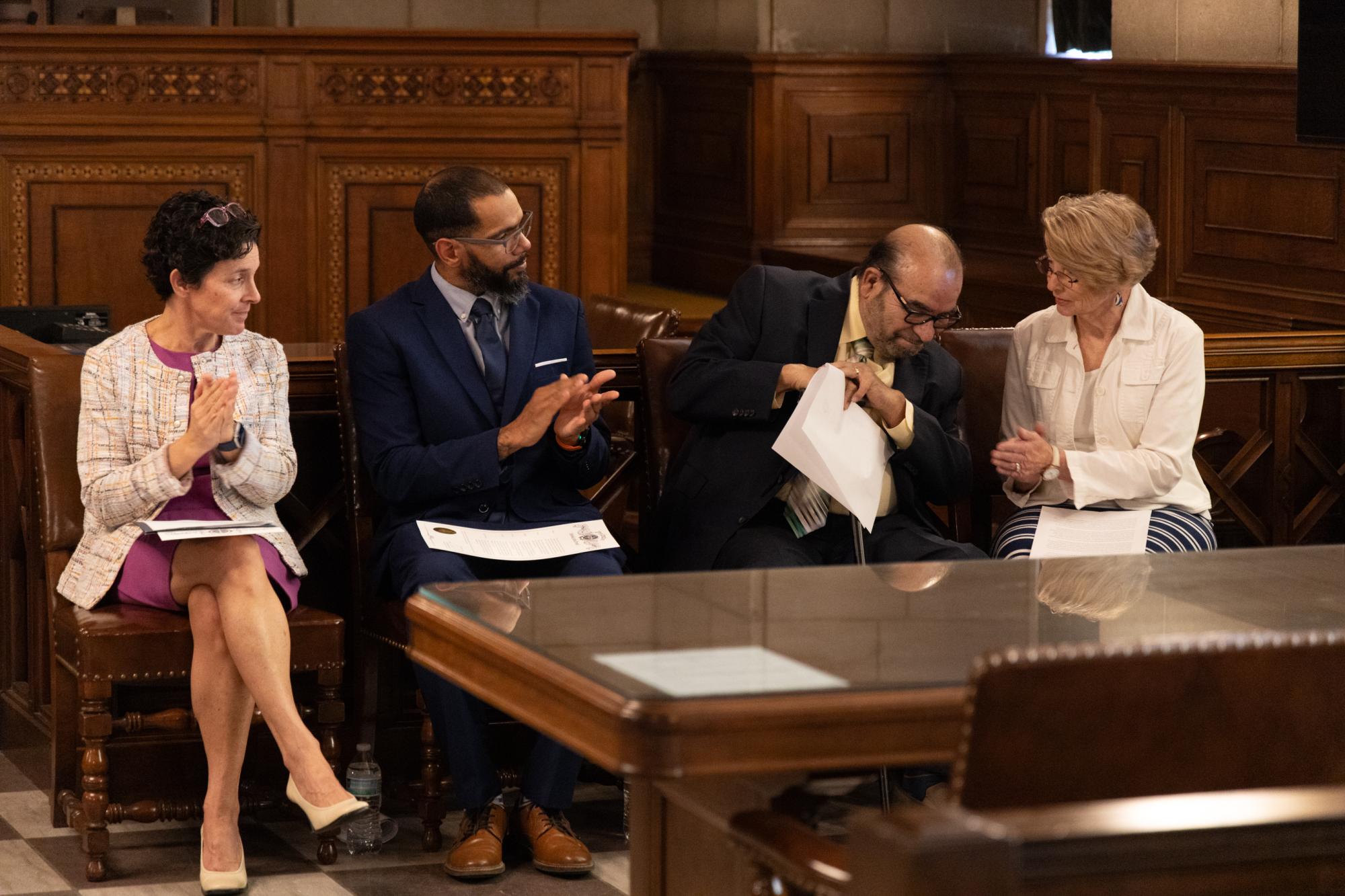
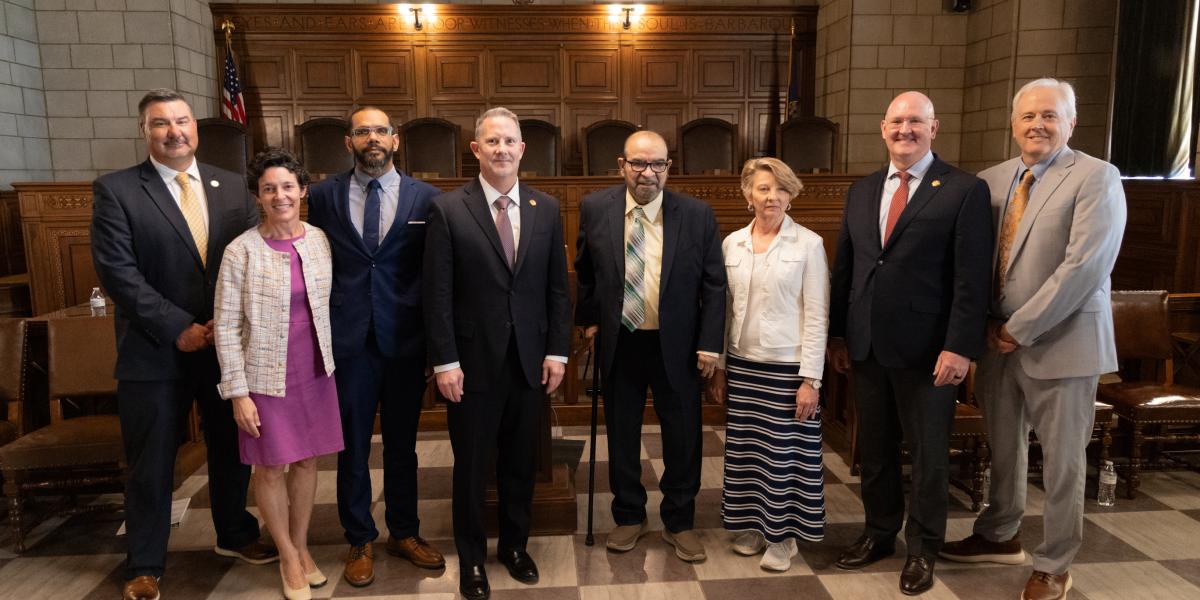
In a ceremony in the Nebraska Supreme Court Courtroom, Chief Justice Jeffrey Funke held a proclamation signing ceremony on behalf of the Nebraska Judicial Branch on Monday, May 4 at 1:30 p.m. The ceremony was streamed live and is available for viewing.
In his opening remarks, Justice Jason Bergevin noted the purpose of Problem-Solving Court Month, giving special recognition to the work of these courts, and calling particular attention to the 21 adult drug courts statewide. Sarpy County District Court Judge Stefanie Martinez reflected that her work in the Sarpy County Adult Drug Court “has become the most rewarding part of my job. Here, I get to see the real effects that accountability and support can have on a person’s life.” Judge Martinez also thanked State Senators Rick Holdcroft and Victor Rountree for their support in attending many Sarpy County graduations.
Those in attendance also had the opportunity to hear from recent Sarpy County Adult Drug Court graduate Alex Strong. He spoke about his experience in participating in the court, noting, “They see potential in people when those people can’t see it in themselves.” Strong continued noting the structure and consistency of the program instilling accountability and support, allowing participants to become someone who is involved in their community and breaking the cycle of addiction.
In an additional proclamation, Chief Justice Funke turned the spotlight to the impact of LB454, passed in 2004, which created Problem-Solving Courts as effective alternatives to traditional criminal proceedings enshrined in state law. Former Senator Ray Aguilar of Grand Island, and his legislative aide at the time, Margaret Buck, were in attendance for the ceremony. Senator Aguilar said the legislation gives individuals “a second chance at life.” He further noted “I became a legislator not for the recognition or rewards. I chose to do so to make lives better for my constituents. This bill does just that. More than any bill or any legislation I worked on in the body.” Buck echoed Aguilar’s sentiments “it’s become much much more than we ever envisioned in the beginning.”
In closing the day’s ceremony, State Probation Administrator Gene Cotter called out the success and growth of Problem-Solving Courts across the state. Since fiscal year 2020 there has been a 41% growth, and last year saw a 58% graduation rate. Cotter commented “without these Problem-Solving Courts, all 2,000 of those individuals would have likely been destined for a jail or prison cell.”
Problem-Solving Courts, which operate through the Nebraska Judicial Branch, are innovative court programs that combine intensive community-based supervision, judicial accountability, and behavioral health treatment to intervene against crime by addressing circumstances underlying criminal conduct. Judges, defense attorneys, prosecutors, supervision personnel, law enforcement, treatment providers, researchers, educators, and others dedicated to problem-solving courts work collaboratively to improve the lives of their participants and strengthen communities across the state.
Additional coverage: